
What Does Salt Do In Baking? The Science Behind This Essential Ingredient
- Zayan Rauf
Key takeaways
- Salt enhances sweetness and balances flavors in all baked goods
- Controls yeast fermentation in bread dough for proper rise and texture
- Strengthens gluten structure, improving dough elasticity and final product quality
- Different salt types (table, kosher, sea, Himalayan) affect measurement and flavor profiles
- Proper salt measurement is critical – volume differs between fine and coarse salts
- Bread without salt rises too quickly, lacks flavor, and develops poor texture
- Cookies made with salt have better flavor balance and controlled spread
When you think of baking essentials, flour, sugar, butter, and eggs likely come to mind first. Yet there’s a small but powerful ingredient that transforms ordinary baked goods into exceptional treats: salt. Understanding what salt does in baking helps home bakers and professional chefs create superior breads, cookies, and cakes with consistent results.
Americans consume approximately 3,400 milligrams of sodium daily, significantly exceeding the recommended 2,300 milligrams [1]. More than 70% of this sodium comes from packaged and processed foods, with baked goods being major contributors. This makes understanding salt’s role in baking not just about taste, but about health-conscious cooking practices as well.
Why Salt Matters in Baking
Salt serves three fundamental functions that make it indispensable in baking:
- Flavor Enhancement: Salt amplifies sweetness, intensifies chocolate flavor, and brings out natural tastes in other ingredients. Without salt, even sugar-rich desserts taste flat.
- Yeast Control: In bread making, salt regulates yeast activity, preventing overly rapid fermentation for proper texture and complex flavor development.
- Gluten Strengthening: Salt tightens gluten strands in flour, creating structure that helps dough hold gas bubbles and maintain shape during baking.
Did You Know?
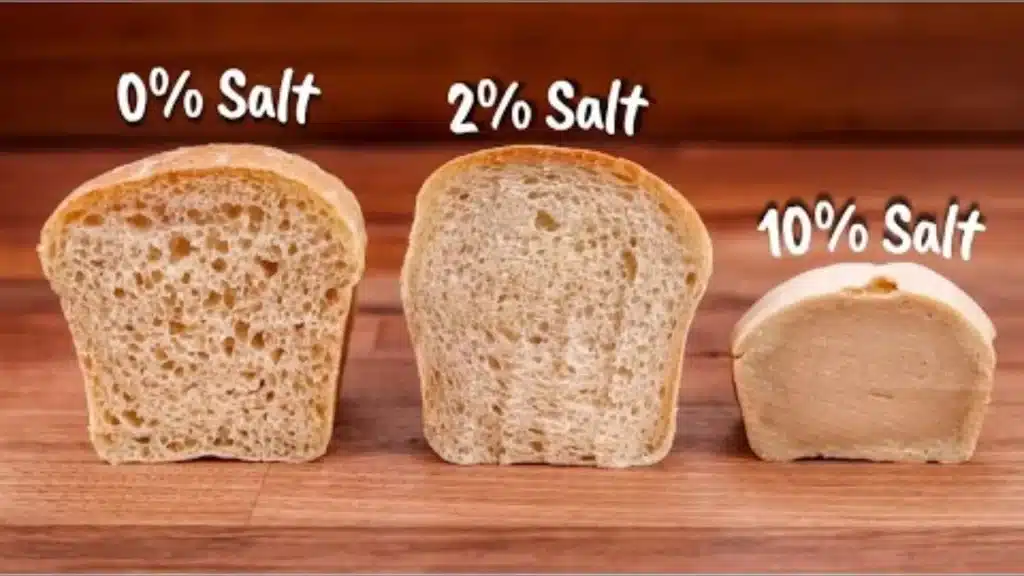
Over 70% of dietary sodium comes from packaged and prepared foods rather than table salt added during cooking [1]. Baked goods like bread typically contain around 2% salt by weight of ingredients, making them significant contributors to daily sodium intake despite their seemingly modest salt content.
The Science: How Salt Functions in Baking
Flavor Amplification
Salt acts as a natural flavor enhancer through complex chemical interactions. It suppresses bitterness in cocoa and dark chocolate while enhancing sweetness and other flavors [2]. This explains why a pinch of salt makes chocolate richer and caramel more balanced.
Yeast Fermentation Control
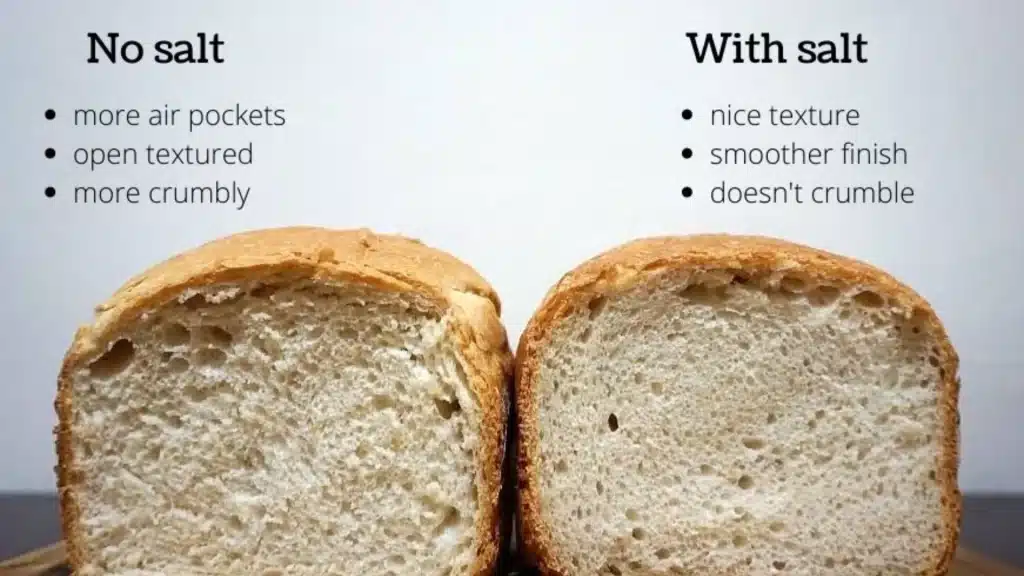
Salt draws moisture away from yeast cells, moderating their activity [4]. This controlled fermentation produces deeper bread flavors, finer crumb structure, and better gas retention during rising. Without salt, yeast consumes sugars too rapidly, creating bread with large irregular holes and yeasty taste.
Gluten Network Strengthening
Studies show salt can improve gluten strength by up to 86% [5], creating dough that is elastic, easier to handle, and less prone to tearing. Salt molecules bond with flour proteins, tightening gluten strands into an organized network [6]. The result is dough that holds carbon dioxide efficiently, maintains shape better, and produces higher-rising bread with superior volume.
Read More: How to Use Himalayan Salt for Cooking
What Does Salt Do in Cookies?
Cookies benefit from salt in distinct ways:
- Flavor Balance: Salt balances sweetness and enhances chocolate, vanilla, and butter flavors. Cookies without salt taste overly sweet [7].
- Texture Control: Salt affects cookie spread during baking. Different types produce varying results – kosher salt spreads evenly while coarse sea salt creates salty crunch pockets.
- Moisture Regulation: Salt controls moisture distribution, affecting final texture. Proper salt creates chewy centers rather than cake-like consistency.
Types of Salt for Baking
Choosing the best salt for baking depends on your specific application. Different salts vary significantly in crystal size, flavor, and chemical composition.
Salt Type | Crystal Size | Best Uses | Characteristics |
Table Salt | Very fine | General baking, even distribution | Dissolves quickly; contains iodine |
Kosher Salt | Coarse, flaky | Bread dough, dough mixing | Pure salt; no additives; easy to pinch |
Sea Salt | Varies (fine to coarse) | Finishing, specialty breads | Mineral-rich; natural flavor |
Himalayan Pink Salt | Fine to medium | Edible applications, flavor enhancement | 84+ trace minerals; subtle taste |
Fleur de Sel | Delicate flakes | Cookie/caramel finishing | Premium; hand-harvested; decorative |
Important Measurement Note: One teaspoon of fine table salt weighs significantly more than one teaspoon of coarse kosher salt. When substituting salts, measure by weight rather than volume for accuracy.
Can You Use Himalayan Salt for Baking?
Yes, Himalayan pink salt works excellently in baking applications. Its fine to medium crystal structure dissolves well in doughs and batters, while trace minerals provide subtle flavor complexity that enhances baked goods without overpowering other ingredients.
Himalayan edible salt from reputable sources like Sobaan Salts offers consistent quality for both home and commercial baking operations. The natural mineral content adds nutritional value while maintaining the functional properties bakers need for yeast control and gluten development.
Salt's Role in Different Baked Goods
Bread
Bread demonstrates salt’s most dramatic effects:
- Fermentation Regulation: Controls yeast growth for optimal flavor and crumb structure
- Crust Development: Creates golden, flavorful crusts through browning reactions
- Texture Enhancement: Strengthens gluten for chewy interior and proper structure
- Shelf Life Extension: Slows staling and prevents rapid deterioration
Bread without salt rises too quickly, develops irregular holes, tastes bland, and goes stale faster.
Cakes
In cakes, salt plays a subtle but important role by balancing sweetness, strengthening batter structure for even rising, and enhancing vanilla, cocoa, and other ingredient flavors. Even sweet cakes benefit from ¼ to ½ teaspoon of salt per recipe.
Cookies
Cookies showcase salt’s flavor-enhancing capabilities by controlling spread for proper texture, balancing sweet and savory notes, and enhancing chocolate and brown sugar caramelization.
Did You Know?
Bread can vary from 200mg to over 700mg of sodium per 100 grams depending on the recipe [8]. This wide variation demonstrates why home baking gives you better control over sodium intake compared to commercial products.
Measuring Salt Correctly
Precise salt measurement ensures consistent results:
By Weight (Most Accurate):
- 1 teaspoon table salt = 6 grams
- 1 teaspoon kosher salt = 4-5 grams
- 1 teaspoon sea salt = 5-6 grams
Pro Tip: If a recipe doesn’t specify salt type, assume fine table salt. When using coarser salts, increase volume slightly or measure by weight for accuracy.
What Happens When You Bake Without Salt?
Omitting salt produces noticeably inferior results:
- In Bread: Dough rises too rapidly, weak gluten causes poor shape, bland yeasty flavor, pale crust, and rapid staling.
- In Cakes: Overly sweet taste, weaker structure may cause collapse, and diminished flavor intensity.
- In Cookies: Excessive sweetness masks flavors, altered spread patterns, and soft cake-like texture instead of proper cookie structure.
Choosing Quality Salt for Baking
When selecting salt for baking, consider:
- Crystal Size: Fine salts dissolve quickly; coarse salts work for dough mixing and finishing
- Purity: Choose salts without additives or anti-caking agents
- Mineral Content: Natural salts like Himalayan contain trace minerals for subtle flavor complexity
For consistent quality, source salt from reputable suppliers who provide food-grade products with reliable purity standards.
Conclusion
Salt transforms baking from basic chemistry into culinary art. Its ability to enhance flavors, control fermentation, and strengthen gluten makes it irreplaceable in bread, cakes, and cookies. Understanding what salt does in baking – and choosing the right type for each application – elevates your results from acceptable to exceptional.
Whether you’re kneading bread dough, mixing cookie batter, or preparing cake batter, that pinch of salt makes all the difference. For the best baking results, use high-quality salt that delivers consistent performance and pure flavor in every batch.
References
[1]: U.S. Food and Drug Administration. (2024). Sodium in Your Diet. Americans consume 3,400mg sodium daily; over 70% comes from packaged/processed foods. https://www.fda.gov/food/nutrition-education-resources-materials/sodium-your-diet
[2]: Baker Bettie. (2024). The Importance of Salt in Baking. Salt enhances flavors by suppressing bitterness and intensifying sweetness and other taste notes. https://bakerbettie.com/the-importance-of-salt-in-baking/
[3]: ScienceDirect. (2021). Salt Reduction in Sweet Biscuits. Reducing salt by 33% in sweet biscuits doesn’t significantly impact consumer acceptance. https://www.sciencedirect.com/science/article/pii/S2590157521000031
[4]: King Arthur Baking. (2020). Why Is Salt Important in Yeast Bread? Salt slows yeast fermentation by drawing moisture away from yeast cells, allowing controlled flavor development. https://www.kingarthurbaking.com/blog/2020/07/29/why-is-salt-important-in-yeast-bread
[5]: NCBI/PMC. (2020). Influence of Sodium Chloride on Bread Properties. Salt improves gluten strength by up to 86%, creating more elastic dough with better gas retention. https://pmc.ncbi.nlm.nih.gov/articles/PMC7404662/
[6]: Baking Sense. (2025). Salt in Baking – How Salt Affects Flavor, Gluten & Structure. Salt molecules bond with flour proteins, tightening gluten strands and strengthening dough structure. https://www.baking-sense.com/baking-school/baking-science/ingredients/salt/
[7]: Choc Chip Cookie Recipe. (2024). Salt in Chocolate Chip Cookies. Salt balances sweetness, enhances flavors, and affects cookie spread and texture depending on type used. https://www.chocchipcookierecipe.com/salt-in-chocolate-chip-cookies/
[8]: U.S. Food and Drug Administration. (2024). Eating Too Much Salt? Ways to Cut Back. FDA data shows breads vary from 200mg to over 700mg sodium per 100 grams. https://www.fda.gov/consumers/consumer-updates/eating-too-much-salt-ways-cut-backgradually
Share This Post
Article By