
Can You Use Salt on Brick Pavers?
- Zainab Abid

Key takeaways
- Salt does not damage brick pavers on its own. Damage comes from using the wrong type too often, especially below the temperature where that salt stops working.
- Calcium chloride and magnesium chloride are the safest de-icing salts for pavers. Sodium chloride (rock salt) is cheapest but causes the most surface wear over time.
- Sodium chloride stops melting ice below about 12°F. Below that point it sits on the surface instead of working, which is when most damage happens.
- Sealing your pavers before winter lowers the risk of salt damage no matter which salt you use.
- Sand, kitty litter, and heated mats are salt-free options that add traction with zero damage risk.
Yes. Salt is safe to use on brick pavers when you choose the right type and apply it correctly.
Problems start when people grab whatever rock salt is cheapest, use it heavily all winter, and never seal their pavers. That combination is what causes cracking, flaking, and white surface stains.
The fix is simple: pick a paver-safe salt, use less of it, and protect your pavers with a sealant before the cold sets in.
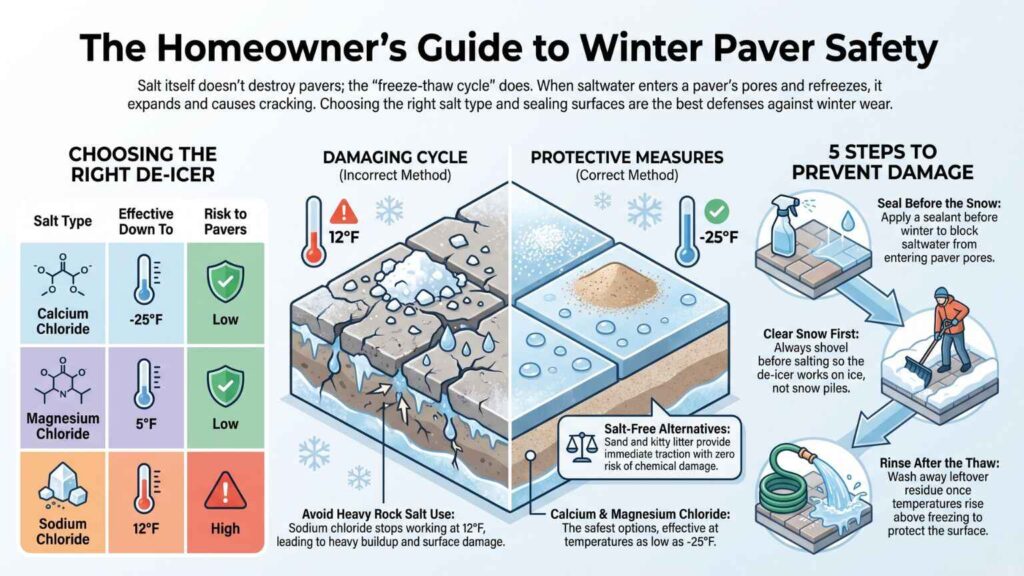
Does Salt Damage Brick Pavers? Here Is Why
Yes, salt can damage brick pavers, but salt alone is not the cause. The real damage comes from the freeze-thaw cycle.
Brick and concrete pavers have tiny pores. Saltwater seeps into these pores. When it refreezes, it expands and pushes against the inside of the paver. Repeat this enough winters in a row, and the surface starts to crack or flake.
Rock salt (sodium chloride) — the same de-icing salt used on roads and parking lots — gets blamed most often, and there is a real reason. Rock salt stops melting ice below about 12°F (Kansas State University Research and Extension). In colder snaps, people apply more of it to compensate. That extra salt sits on the surface, soaks into the pores, and refreezes when temperatures drop again.
One distinction worth making: white staining you sometimes see on a wall (not a walkway) in warmer months is usually efflorescence, not de-icing salt damage. Efflorescence is a separate, natural process where minerals already inside the brick or mortar rise to the surface. It has nothing to do with the salt you apply to melt ice.
Which Salt Is Safe for Brick Pavers?
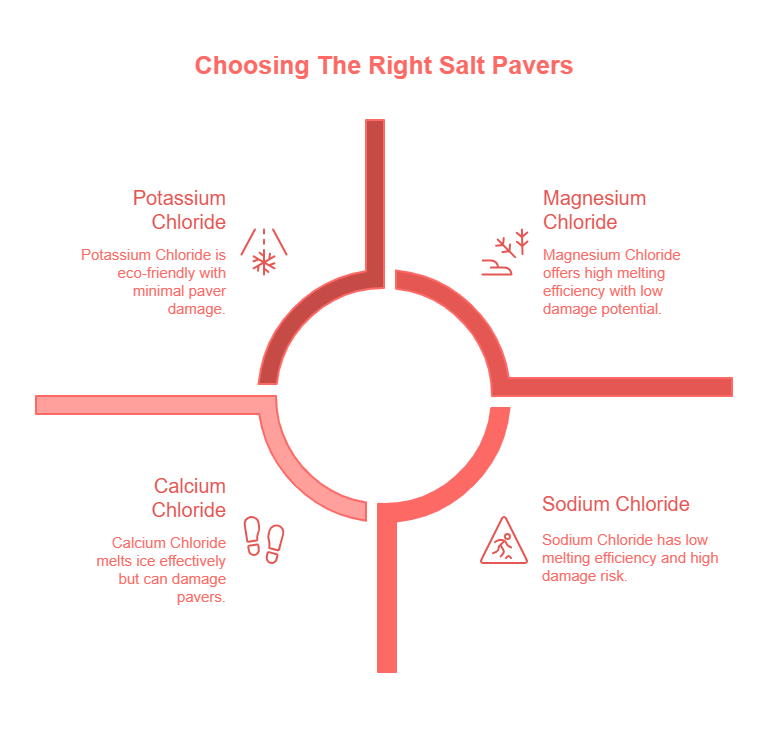
Here is how the main de-icing salts compare on paver safety and cold-weather performance.
Salt Type | Effective Down To | Risk to Pavers | Best Use Case |
Sodium Chloride (Rock Salt) | ~12°F | Highest, repeat use causes surface wear | Occasional use in mild cold |
Calcium Chloride | -25°F | Lower, can leave slight residue | Very cold climates |
Magnesium Chloride | 5°F | Lower, gentler on surfaces and plants | Regular winter use |
Potassium Chloride | 20°F | Lowest, but slower-acting | Eco-conscious use, mild cold |
Sand (not a salt) | No melting | None | Traction only, any temperature |
Source: Kansas State University Research and Extension.
For the chemistry behind why some salts work in much colder temperatures than others, see our guide on how rock salt makes ice colder.
Is Salt Bad for Pavers? The Short Answer
No, not automatically. The outcome depends on the type of salt, how much you use, and how often.
A light, occasional application of calcium or magnesium chloride on a sealed paver will not cause visible damage. Heavy, repeated rock salt use over several winters is what leads to the cracking and staining homeowners complain about.
How to Use Salt on Brick Pavers Safely
- Clear snow first. Salt works best on a thin layer of ice, not a pile of snow.
- Choose calcium chloride or magnesium chloride over rock salt when you can.
- Apply a thin, even layer. Do not pile salt in one spot.
- Rinse your pavers once temperatures rise above freezing, to remove leftover residue.
- Seal your pavers before winter starts. A sealant blocks saltwater from reaching the pores in the first place.
Does Salt Damage All Pavers the Same Way?
No. The material matters as much as the salt.
- Concrete pavers absorb more moisture, so they are more vulnerable to freeze-thaw damage.
- Clay brick is denser and naturally more salt-resistant.
- Natural stone varies by type. Granite resists well. Limestone and sandstone are porous and wear faster.
If you are unsure about your specific pavers, check with your paver manufacturer or installer. They can confirm what is safe for your exact material.
Salt-Free Alternatives to De-Icing Pavers
- Sand: adds traction, causes zero paver damage.
- Non-clumping kitty litter: similar traction benefit to sand.
- Heated mats: clear ice without any chemicals.
- Permeable paver systems: if you are installing new pavers, this is worth considering.
Permeable pavers drain water through the surface instead of letting it pool and freeze. A study cited by the U.S. EPA found permeable pavement needed roughly 77% less de-icing salt per year, because far less snow and ice built up on the surface to begin with.
Frequently Asked Questions
Is salt bad for pavers?
No, not on its own. Salt becomes a problem only when the wrong type is used too often, or applied too heavily. Calcium chloride and magnesium chloride are gentle enough for regular winter use when applied correctly.
Does salt damage block paving?
Yes, it can, especially with repeated use of sodium chloride (rock salt). Saltwater seeps into the pores of block paving, then expands when it refreezes. This freeze-thaw cycle causes the cracking and surface wear, not the salt by itself.
What salt is safe for pavers?
Calcium chloride and magnesium chloride are the safest choices for brick and concrete pavers. Both melt ice at much lower temperatures than rock salt and cause less surface wear with regular use.
Can you put salt on brick pavers?
Yes. Brick pavers can handle salt when you choose a paver-safe type, apply it sparingly, and rinse the surface once temperatures rise. Sealing your pavers beforehand adds extra protection.
Does rock salt damage brick?
It can, mainly with heavy or repeated use. Rock salt stops melting ice below about 12°F, so people tend to apply more of it during cold snaps. That extra salt is what speeds up surface damage, not occasional light use.
Final Thoughts
You can use salt on brick pavers safely. The type of salt you choose matters more than how much salt you use in general. Calcium chloride and magnesium chloride protect your pavers far better than ordinary rock salt, especially across multiple winters.
Sobaan Salts manufactures de-icing salt at scale, using the same chemistry covered in this guide. If you are sourcing salt in bulk for property management, municipal contracts, or distribution, see our ice melt salt products.
Sources
- Kansas State University Research and Extension — Choosing the Best Ice Melt Product
- Kansas State University Research and Extension (K-State News) — Picking the right de-icing product
- U.S. Environmental Protection Agency — Winter Is Coming! And With It, Tons of Salt on Our Roads
- Interlocking Concrete Pavement Institute (ICPI) — icpi.org
- Brick Industry Association (BIA) — gobrick.com
Share This Post
Article By

Zainab Abid is the Sales and Content Manager at Sobaan Salts, where she works with international buyers and businesses sourcing premium Himalayan salt products. She writes about Himalayan salt, its applications, export processes, and industry best practices, combining practical experience with insights gained from working closely with manufacturers and global customers. Her goal is to make technical topics easy to understand while helping readers make informed decisions about Himalayan salt products.
Related posts
Table of Contents
Need Bulk Himalayan Salt for Winter Surface Maintenance?
Source premium Himalayan salt directly from a verified Pakistani manufacturer trusted by distributors and importers in over 90 countries.


